Canine Longevity & Healthspan
Helping dogs stay well for more of the life they already have.
Dogs sit at the center of our families in a way few previous generations of dogs have. They share our routines, our rooms, our travel, and often our most difficult moments. For many people, they are also the first place in adult life where aging, illness, and loss become impossible to avoid.
So it makes sense that canine longevity has become one of the defining conversations in pet health.
The frame
Lifespan, healthspan, well-span.
Owners are asking better questions. Can my dog live longer? Can we detect disease earlier? Can nutrition, exercise, supplements, bloodwork, genetics, mobility care, or new therapies actually change the way dogs age? And perhaps the most important question of all: how do we keep extra time from becoming painful, weak, confused, or medically chaotic?
Longevity is not a single pill, test, diet, supplement, or protocol. It is a more disciplined way of thinking about aging: preserving the systems that allow a dog to move, eat, think, recover, adapt, and enjoy life.
In human medicine, this idea is often called healthspan. For dogs, I think of it more practically as well-span: the length of life a dog spends well enough to live like himself.
Lifespan asks how long your dog is alive. Well-span asks how long your dog is still able to live like your dog.
Why now
Pet longevity is having a moment.
Owners are being offered new drugs, supplements, genetic tests, cancer screening tools, microbiome reports, biological-age tests, smart collars, and personalized protocols, all promising more time with the dogs they love. Some of this is exciting. Some is promising. Some is premature. Some risks turning love into panic.
The problem is not that owners care too much. The problem is that they are often asked to make complicated decisions without a clear map.
As one of the few veterinarians board-certified in both veterinary nutrition and sports medicine/rehabilitation, I approach canine longevity through two systems owners often notice first and veterinarians can measure meaningfully: what a dog is made of, and how well that dog can still move.
The mistake is not wanting more time. The mistake is being forced to choose between magical thinking and passive acceptance. Canine longevity needs a third path: evidence-based, observant, adaptive care.
The future of canine longevity will not belong to the loudest promise. It will belong to the clearest map.
The core idea
Protect reserve.
A young, healthy dog has reserve to spare. Muscle reserve, mobility reserve, metabolic reserve, immune reserve, organ reserve, cognitive reserve, recovery reserve.
An aging dog gradually loses that reserve, often invisibly, until a single illness, surgery, infection, fall, or stressful event reveals how little was left. That is what owners are often seeing when they say a dog “aged overnight.” The collapse looked sudden, but the reserve had usually been draining for years.
Longevity care is the practice of protecting that reserve before it is gone. Body composition, mobility, nutrition, inflammation, screening, pain control, and targeted intervention are not isolated wellness topics. They are the systems that determine whether an aging dog still has options.
The goal is not simply to extend life. The goal is to protect the life inside those extra months.
First foundation
Protect body composition.
The most powerful longevity intervention in dogs may also be the least glamorous. In a landmark lifetime study of Labrador Retrievers, dogs maintained in lean body condition lived a median 1.8 years longer and developed chronic disease later.
The lesson is not that dogs should be made thin at any cost. The lesson is that body composition matters profoundly. Excess fat is not passive. It can worsen inflammation, stress joints, reduce mobility, and contribute to the diseases that make aging harder. But the opposite mistake is also common: allowing older dogs to lose muscle while assuming that stable weight means stable health.
A dog can be overweight and under-muscled at the same time.
Muscle is not cosmetic. It is a survival tissue. For an aging dog, losing muscle is not just a sign of getting older. It is a loss of options.
Keep dogs lean enough to reduce disease burden, but strong enough to remain resilient.
The structural problem
The treat math problem.
A typical 40-pound adult dog may need roughly 750 to 900 calories a day, depending on age, neuter status, activity, body condition, and metabolism. That is the daily budget, not the bowl plus whatever happens around it.
A small baked treat may be 20 to 30 calories. A bully stick may be 80 to 120. A stuffed Kong can add 150 to 300. A few training treats, a dental chew, a table scrap, and a lick mat can quietly become a meaningful fraction of the day before dinner is counted.
This is not gluttony, and it is not bad ownership. It is a feeding system in which the bowl gets measured and everything else does not.
Treats, chews, training rewards, dental sticks, pill pockets, table scraps, toppers, and enrichment food all count. But most feeding charts are written as if the bowl is the whole diet.
The practical move is to know the calorie density of the food being fed, weigh it rather than scoop it when possible, and count treats inside the daily allowance - not on top of it.
One of the most underused longevity interventions in dogs requires no new product or drug. It requires attention to body condition, calories, and what is actually being fed.
A food detail worth watching
Processing is not one thing.
The dominant story in pet nutrition is that less-processed food is better. The honest story is harder.
Within every category - kibble, canned, fresh, raw, gently cooked, home-prepared - processing varies enormously, and the label almost never tells you enough.
Some differences are built into the format. Kibble has to be heated enough to gelatinize starch. Canned food has to be sterilized. Those are processing floors. But within those floors, manufacturers can cook more gently or more aggressively, and the category alone does not tell you which happened.
Fresh and mildly cooked diets may vary even more, because there is no single standard for how hot, how long, or how much shear. Think about toast: you can lightly warm a slice or burn it black, and both are still “toasted bread.” Pet food works the same way. Two “gently cooked” diets can be processed very differently and marketed with the same language.
Two processing details are worth watching, while being honest that the canine literature is still early and the long-term clinical impact is not fully established.
The first is the gut microbiome. Short-term studies in dogs suggest that identical formulas extruded under different conditions can produce different microbiome composition, short-chain fatty acid output, and immune responses. Same recipe, different processing, different downstream effects.
The second is advanced glycation end products, or AGEs: compounds formed when sugars and amino acids react under heat. Higher-temperature processing can generate more of them. Their long-term impact on canine health is still being studied. One counterintuitive finding so far is that some commercial canned diets, often perceived as less processed because they look more like meat, have produced high circulating AGE responses compared with other formats tested in dogs. Whether that matters clinically is exactly the question the field has not yet answered.
The point is not that one category is always good and another is always bad. The point is that “processed” is too blunt a word.
Pet food 1.0 was mostly about nutrients. Pet food 2.0 became mostly about ingredients. Pet food 3.0 has to integrate both, plus processing and the individual animal.
The better question for a pet food company is no longer only “what is in it?” It is also: how was it made, what did that processing do to the ingredients, and how does the dog actually respond?
Companies that can answer should win. Companies that cannot should be pressed to.
Read more about our call for better transparency around pet food processing in Frontiers in Veterinary Science.
Second foundation
Protect mobility.
Mobility is not just a quality-of-life concern. In dogs, it is lifespan architecture. A dog who can no longer rise comfortably, climb into the car, manage stairs, or toilet outside does not just lose activity. He loses autonomy, weight management, social engagement, and the practical timeline that often determines when families begin confronting difficult end-of-life decisions.
Protecting mobility means looking earlier and more carefully at pain, arthritis, muscle loss, tendon and ligament vulnerability, neurologic changes, conditioning, body weight, paw and nail care, and the home environment: slick floors, furniture jumps, and stairs without traction that make an aging dog less confident.
It also means refusing to normalize decline that owners have been told is just “old age.” It also means expanding our view beyond joints alone. Emerging evidence links mobility with the gut, circulating hormones, and low-level inflammation. A dog whose pain is controlled and whose musculature is maintained will still age. But the arc can look different: more walks, better recoveries, more days that still feel like life.
Aging may be inevitable. Untreated mobility loss is not.
The diagnostic eye
How dogs tell you they are declining.
Dogs do not usually announce decline the way owners expect. They tell you in quieter ways. The signal is often in the comparison to the dog they were twelve months ago, not the dog next door.
The early signs can be easy to explain away: stopping at the bottom of the stairs and waiting to be invited up. Hesitating before jumping into the car. Sitting with one leg kicked out because square sitting hurts. Lying down sooner on walks. Slower greetings at the door. Shorter zoomies, or none. Circling longer before settling. Less play initiation. Slower recovery the day after a longer walk. Trembling in the hind end. A subtle topline drop. Asymmetric muscle loss along the spine that you do not notice until you run a hand over it.
None of these alone is a diagnosis.
Several together, in a dog who used to move differently, are a reason to look more closely.
The mistake is waiting for the obvious version: limping, crying out, refusing food, or being unable to rise. By then, the process has often been underway for months. The early signals are not subtle because nothing is happening. They are subtle because dogs adapt.
Pain control and mobility care in dogs are better than they have ever been. The interventions usually work better, and preserve more function, when we reach for them earlier.
Naming the process
Most dogs do not just “get old.”
“Old age” is what we say when a dog has been declining for months or years and no one has named the process clearly enough. Most dogs do not die of “old age” in any clinically useful sense. They die of identifiable diseases and declines that often begin quietly: cancer, kidney disease, heart disease, endocrine disease, obesity and metabolic dysfunction, mobility loss, chronic pain, dental disease, cognitive decline, frailty, and loss of resilience.
Behind those diagnoses are overlapping biological processes aging research has helped clarify: chronic low-grade inflammation, genomic instability, metabolic and mitochondrial dysfunction, immune changes, and progressive structural breakdown of joints, organs, muscle, and connective tissue. These processes are not isolated. They often accelerate one another, and some are modifiable enough to matter clinically.
A longevity-focused approach therefore asks a different question. Not “Is my dog old?” but “Which systems are beginning to fail, and what can we still change?”
The best time to protect an aging dog is usually before the crisis.
Where the biology of aging becomes reachable
The clinical levers that shape how dogs age.
A modern longevity approach should be organized around the clinical domains where aging is most measurable and modifiable in dogs.
Nutrition
Food shapes body composition, immune signaling, metabolic health, inflammatory burden, and the ability to maintain muscle through age and illness. Aging dogs need more than a generic 'senior diet' - they need nutrition matched to body condition, disease risks, digestion, and appetite.
Mobility & pain
Covered as a foundation above - pain control, arthritis management, muscle preservation, and the home environment together determine how long a dog stays comfortably mobile.
Inflammation
A pattern, not a single thing - emerging from obesity, periodontal disease, arthritis, gut disease, chronic infection, and poorly controlled pain. The mouth is one of the most overlooked sources. If we are serious about longevity, we cannot ignore the mouth.
Gut health
The gut influences digestion, immune signaling, inflammation, and recovery from illness. Not every dog needs a microbiome test - but diet composition, fiber, protein quality, and processing all matter.
Endocrine & metabolic
Thyroid disease, Cushing’s, diabetes, and obesity-related metabolic dysfunction quietly shape how a dog ages. Some dogs slow down because they are painful; some because they have endocrine disease. Often more than one thing is happening at once.
Cognition
The brain ages with the body. Confusion, disrupted sleep, pacing, anxiety, or simply seeming 'not quite himself' may be early signals. Sometimes the earliest signs of aging are the small changes an owner almost talks herself out of noticing.
Early detection
Routine bloodwork, urinalysis, blood pressure, body and muscle scoring, dental evaluation, and breed-risk awareness - tracked as trends, not snapshots. The goal is not to test everything; it is to detect what matters early enough to change the outcome.
Targeted supplementation & therapeutics
Not a random cabinet full of powders. Thoughtful combinations designed around the cellular processes most likely to drive decline: inflammation, oxidative stress, mitochondrial function, joint health, cognition, and muscle maintenance. The goal is to stop treating supplements like fairy dust.
These systems rarely fail in isolation. The point of longevity care is to see the pattern early: where reserve is being lost, which declines are modifiable, and which interventions are worth prioritizing for this dog.
It depends on the dog
Why bigger dogs age faster.
Dogs are not small furry humans. They are also not all aging in the same way.
A Great Dane and a Chihuahua are the same species, but they live almost completely different aging trajectories. A seven-year-old Dane is functionally older than a seven-year-old Yorkie in almost every meaningful sense.
The rough pattern is familiar to anyone who has lived with dogs: giant breeds often have the shortest lives, many medium and small breeds live longer, and very small breeds may live longer still. Mixed-breed dogs often outlive purebred dogs of similar size, though size remains one of the strongest forces shaping lifespan.
The biological question is why.
Across mammals, bigger animals usually live longer. Elephants outlive mice. But within dogs, the relationship is inverted: bigger dogs die younger, often dramatically so.
The leading explanation involves the growth signals dogs use to become large quickly. The same biology that builds a giant dog may also accelerate some of the processes that wear that dog down: faster cellular aging, more oxidative stress, earlier structural strain, and higher cancer risk.
This is not just academic. It is one reason several canine-longevity efforts are focused on metabolic and growth-related pathways, especially in larger dogs. Other research is testing whether drugs such as rapamycin can influence health and aging in companion dogs.
Some of these programs will fail. Some may work. None replaces the basics.
If a longevity drug arrives, it will still work best in a dog whose reserve has already been protected: lean body composition, preserved muscle, controlled pain, dental care, thoughtful nutrition, and earlier detection.
Breed matters too. Golden Retrievers, Boxers, Bernese Mountain Dogs, and Flat-Coated Retrievers carry major cancer burdens. Brachycephalic breeds such as Bulldogs, French Bulldogs, and Pugs face airway and orthopedic risks that shape their entire aging arc. Dachshunds and other long-backed breeds carry disproportionate disc disease risk. Some large-breed dogs are predisposed to orthopedic, cardiac, and endocrine problems.
Genetics within a breed also varies more than most owners realize. Two Labradors from different lines may have meaningfully different orthopedic, cancer, or metabolic risks before lifestyle and nutrition enter the picture.
Aging in dogs is breed-specific biology, not generic decline.
A protocol that treats all dogs the same is, in practice, treating none of them well.
The hardest topic
Cancer-aware longevity.
Cancer is one of the leading causes of death in adult dogs, and in some breeds it dominates the aging conversation. Any honest conversation about canine longevity has to make room for it. In some high-risk breeds, cancer may account for a very large share of mortality.
Cancer sits in a hard zone for owners and veterinarians. Some risk is breed-driven and largely outside any individual owner’s control. Some is shaped by body composition, environmental exposures, and chronic inflammation - modifiable, but only in ways that shift probability rather than guarantee outcome. And some cancer appears effectively random, which is hardest of all to discuss honestly.
Cancer-aware care is not about pretending we can prevent every cancer. Practically, it means knowing your dog’s breed-specific risk, maintaining lean body composition deliberately rather than passively, treating chronic inflammatory burdens (especially dental disease) instead of tolerating them, and paying attention to lumps, weight loss, appetite changes, coughing, bleeding, limping, and behavioral shifts as worth investigating rather than waiting out. It also means having an honest conversation before a crisis about what your goals would be if cancer is found.
Newer blood-based cancer screening tests are commercially available, and the underlying technology is genuinely interesting. But their clinical performance in real-world dog populations is still being characterized - especially the false-positive rate, which determines how much downstream worry and unnecessary workup a screening program may create. These tests may become useful tools for selected higher-risk dogs. They are not yet a routine longevity intervention for every dog.
Cancer is not a longevity problem we can fully solve today. It is one we can sometimes shift, sometimes detect earlier, and always prepare for more clearly.
What owners can do now
Begin with better attention.
Canine longevity does not begin with futuristic medicine. It begins with better attention to the dog in front of you.
Keep your dog lean without letting muscle disappear. Have body condition and muscle condition formally tracked, not just weight. Address dental disease before it becomes severe. Treat pain earlier. Treat mobility as something to defend early, not rescue late. Match diet to the dog’s current life stage and current conditions, not simply to the food they were eating two years ago. Use supplements selectively, not reflexively.
Establish baseline laboratory data: chemistry, complete blood count, urinalysis. Where appropriate, add thyroid testing, blood pressure, cardiac screening, or other risk-based diagnostics before obvious clinical signs appear. Watch appetite, thirst, urination, stool, sleep, behavior, movement, recovery, and attitude.
Often the first sign of aging is not a diagnosis. It is a change in rhythm.
For a shorter, more practical version of these principles, see For Dog Owners.
My approach
The practical middle ground.
My work connects veterinary nutrition, rehabilitation, integrative medicine, and aging science - and has for the better part of two decades, in clinical practice, research, teaching, consulting, and the integrative medicine service at the University of Florida College of Veterinary Medicine.
The focus is on the systems that most influence how dogs age: nutrition, lean body mass, mobility, pain, inflammation, gut and oral health, endocrine and metabolic disease, cognition, early detection, targeted supplementation, and quality of life.
The goal is not to make aging disappear. The goal is to help owners and veterinarians recognize decline earlier, intervene more intelligently, and preserve as much comfort, function, and resilience as possible.
Longevity should not make owners panic. It should help them pay attention.
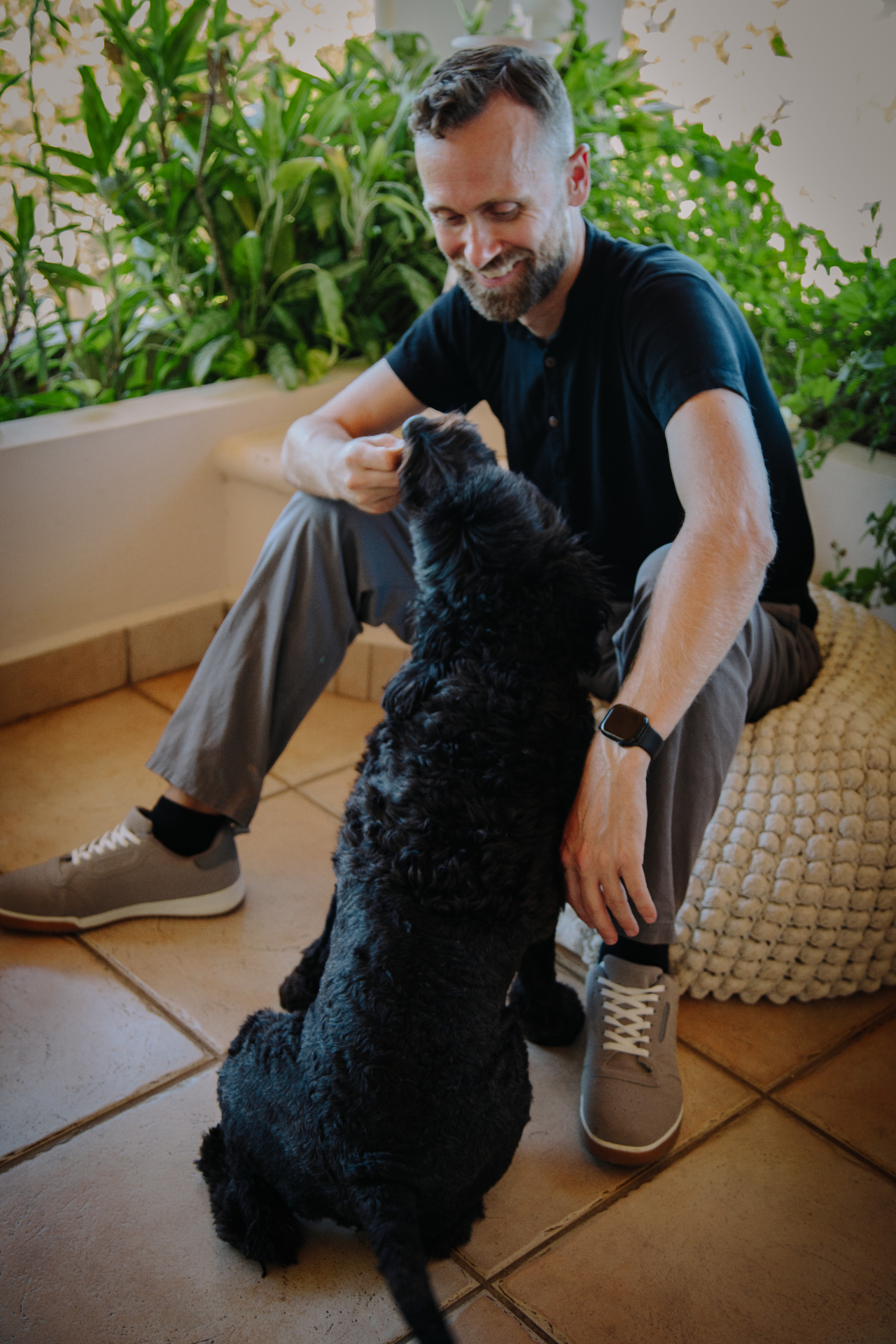
Why this work matters
You are not wrong to want more time. But the best version of more time is not measured only in months or years. It is measured in walks, appetite, sleep, comfort, recognition, play, recovery, and the ordinary rituals that make your dog’s life feel whole.
A dog’s life will never be long enough. But with better nutrition, earlier detection, preserved mobility, thoughtful supplementation, pain control, and more intelligent care, more of that life can be lived well.
Aging is inevitable. How well a dog ages is not.
Better aging is built from small, repeatable decisions about food, movement, monitoring, and attention. The work is quiet. The goal is more time, better spent.
For veterinarians, companies & media
Available for commentary.
Canine longevity is quickly becoming one of the defining topics in pet health. It touches nutrition, supplements, diagnostics, pharmaceuticals, wearable technology, rehabilitation, cancer screening, senior care, owner psychology, and the ethics of promising more time.
I’m available for expert commentary, consulting, writing, and speaking on canine longevity and healthspan, senior dog nutrition, mobility and rehabilitation, pet supplements and nutraceuticals, veterinary nutrition strategy, integrative veterinary medicine, pet food formulation and processing, diagnostics and early detection, evidence-based aging care, and the emerging pet longevity marketplace.
- For media or speaking requests: Get in touch
- For credentials, bio, and headshots: Press kit
Common questions
Frequently asked.
- What is canine longevity?
- The science and clinical practice of helping dogs live longer, healthier lives by protecting the systems that most often determine decline: body composition, mobility, muscle, metabolic health, organ function, immune resilience, cognition, comfort, and early disease detection. It is not just about adding months - it is about preserving function, comfort, and quality of life for more of the life a dog already has.
- What is the difference between lifespan, healthspan, and well-span?
- Lifespan is how long a dog lives. Healthspan is the portion of life spent with preserved function, comfort, and manageable disease burden. Well-span is more personal - how long a dog remains well enough to live like himself: moving comfortably, eating eagerly, sleeping normally, recognizing his people, and recovering from setbacks.
- What is the most important thing owners can do to help dogs live longer?
- The strongest lifespan evidence in dogs comes from maintaining lean body condition. In a lifetime Labrador Retriever study, dogs fed to remain lean lived a median 1.8 years longer and developed chronic disease later. Beyond weight alone, the practical goal is body composition: avoiding excess fat while preserving lean muscle, strength, mobility, and reserve. The point is not thinness. The point is resilience.
- How many calories do dog treats actually add?
- More than most owners think. A dog's main food may be measured carefully, but treats, chews, dental sticks, pill pockets, toppers, table scraps, and enrichment toys often sit outside the budget. For a 40-pound dog, a few small treats and one stuffed Kong can easily become a meaningful fraction of the entire day's calories. That does not mean dogs should never get treats. It means treats have to count. The bowl is not the whole diet.
- Does breed and size really change how a dog ages?
- Profoundly. Larger dogs age faster than smaller dogs - a Great Dane and a Chihuahua live almost completely different aging trajectories despite being the same species. Specific breeds also carry distinct lifetime risks: cancer in Golden Retrievers, Boxers, Bernese Mountain Dogs, and Flat-Coated Retrievers; airway and orthopedic risks in brachycephalic breeds like Bulldogs, French Bulldogs, and Pugs; disc disease in long-backed breeds like Dachshunds. A meaningful longevity plan has to account for what kind of dog it is.
- Why do large dogs age faster than small dogs?
- Dogs are unusual because size and lifespan move in the opposite direction from what we see across many other mammals. Across species, larger animals often live longer. Within dogs, larger breeds generally live shorter lives. The likely explanation involves the growth biology required to build a large dog quickly. Those same growth pathways may also influence cellular aging, cancer risk, oxidative stress, and structural wear. That is why a seven-year-old Great Dane and a seven-year-old Yorkie are not the same biological age in any practical sense.
- What about cancer?
- Yes - and the right response is breed-aware vigilance, not fatalism. Know your dog’s breed risk, keep body condition lean, treat dental and inflammatory burdens, and treat new lumps, unexplained weight loss, limping, or behavioral shifts as worth investigating early. Some risk is genetic and largely outside an owner’s control; some is shaped by body composition, chronic inflammation, and environmental exposures - modifiable in ways that shift probability rather than eliminate risk. Newer blood-based screening tests are interesting, but their real-world performance in dogs is still being characterized.
- Can supplements help dogs age better?
- Some can - but supplements should not be treated as fairy dust or universal longevity insurance. The most interesting future for supplementation is carefully formulated combinations targeting inflammation, oxidative stress, mitochondrial function, gut and immune signaling, joint health, cognition, and muscle maintenance. The responsible question is always what problem we are targeting, what evidence exists in dogs, whether the dose is plausible, and how we will know whether it helped.
- Is canine longevity just senior dog care with a new name?
- No. Senior care often begins once a dog is already visibly old. Longevity care starts earlier - asking which risks are emerging before decline is obvious, which systems can still be modified, and how to preserve comfort, strength, mobility, and resilience before a crisis.
- Are new longevity drugs, cancer tests, genetic tests, and microbiome tools useful?
- Some may become important. Some will be useful only in selected dogs. Some will fail. The responsible position is neither blind enthusiasm nor reflexive dismissal. It is disciplined curiosity - open to what science is showing, careful about what it is not yet showing, and honest about the difference between mechanism-level promise and proven clinical benefit in dogs.
- When should owners start thinking about canine longevity?
- Earlier than most do. Longevity care is not only for very old dogs. It begins when there is still enough reserve to protect - tracking weight, muscle, diet, dental health, mobility, pain, bloodwork trends, and behavior well before obvious decline appears. The best time to notice aging is before everyone agrees it is obvious.
Further reading(click to expand)▾
- Kealy RD, et al. Effects of diet restriction on life span and age-related changes in dogs. J Am Vet Med Assoc. 2002;220(9):1315–1320.
- Morris Animal Foundation. Golden Retriever Lifetime Study.
- Kraus C, Pavard S, Promislow DEL. The size–life span trade-off decomposed: why large dogs die young. Am Nat. 2013;181(4):492–505.
- Greer KA, Hughes LM, Masternak MM. Connecting serum IGF-1, body size, and age in the domestic dog. Age (Dordr). 2011;33(3):475–483.
- Intile J. Liquid biopsy: the future of cancer detection in dogs? Today’s Veterinary Practice. January/February 2024.
- AAHA. 2023 Senior Care Guidelines for Dogs and Cats.
- Bridglalsingh S, et al. Association of four differently processed diets with plasma and urine advanced glycation end products and serum soluble receptor for advanced glycation end products concentration in healthy dogs. J Anim Physiol Anim Nutr. 2024;108(3):756–771.
- Effects of diet type on the core fecal bacterial taxa and the dysbiosis index of healthy adult dogs. Front Vet Sci. 2025;12:1572875.
- Dog Aging Project. dogagingproject.org, including the Test of Rapamycin in Aging Dogs (TRIAD) trial evaluating rapamycin and aging in companion dogs.